Losing a tooth, or several, can change more than your smile. Maybe you’ve started passing on crunchy foods at family dinners, or you catch yourself smiling with closed lips in photos. If you’re weighing dental implants vs dentures, you’ve already taken the first step toward eating and talking with ease again.
Both tooth replacement options can restore how your mouth looks and works, but they get there in very different ways. At Ocean Breeze Dental in Culver City, CA, we walk patients through each path so the decision feels manageable instead of overwhelming. Below, you’ll find how each option works, what treatment involves, and what to ask at your visit.
The Short Version Before You Dive In
- Implants are anchored in the jaw like natural roots, while traditional dentures sit on the gums and come out.
- The implant route takes more time and depends on having enough healthy bone. Dentures are usually faster to get started.
- Cleaning routines differ: one gets brushed in place, the other is removed and soaked.
- Birthdays don’t make the choice for you. Health, bone, budget, and daily habits carry more weight.
- An exam with X-rays is what reveals which option your mouth can support.
How Are Implants and Dentures Different?
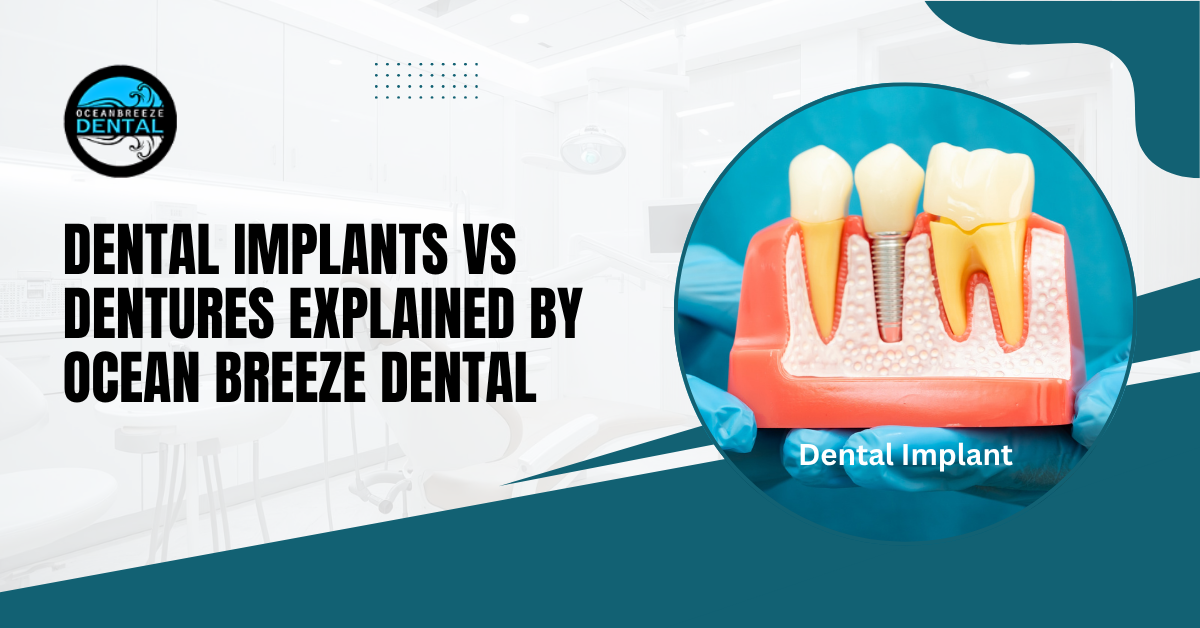
A dental implant is a small titanium post placed in the jawbone that acts as an artificial tooth root. Dentures are removable replacement teeth that rest on your gums. That core difference, fixed versus removable, shapes almost everything else about living with each one.
Here’s how the main options break down:
- Single implant with a crown: Replaces one tooth without touching the teeth next to it.
- Implant-supported bridge: A few implants hold a row of connected replacement teeth.
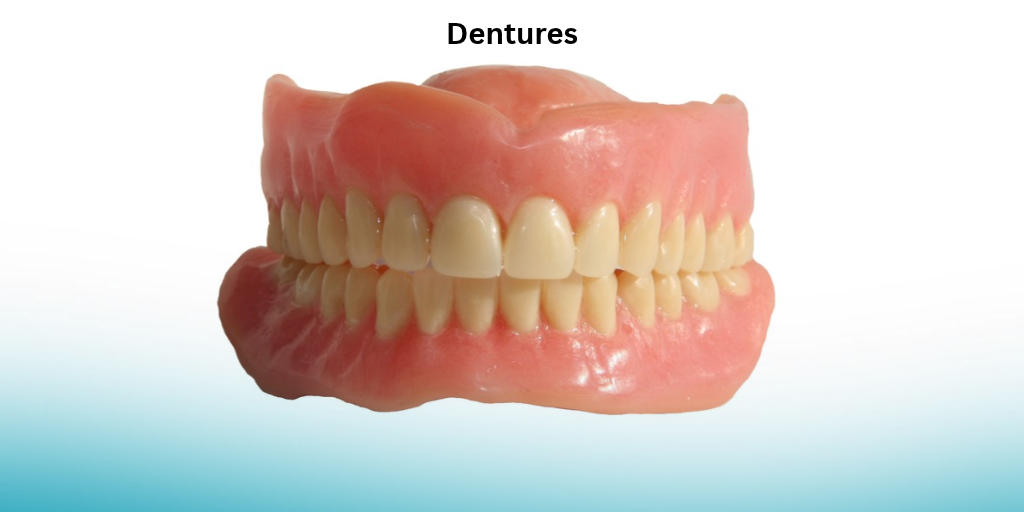
- Full denture: Replaces every tooth in the upper or lower arch and is held in place by suction and fit.
- Partial denture: Fills gaps when some natural teeth remain, often using small clasps to stay put.
- Implant-retained denture: A middle ground where a denture snaps onto a few implants for added stability.
That last choice surprises many patients. If a full set of individual implants isn’t practical, a snap-on denture can offer some of the stability of implants while keeping costs and surgery more limited. You can read more about the treatments we provide on our services page.
Dental Implants vs Dentures: Which Feels More Natural?
For most people, implants feel closer to natural teeth because they’re fused to the bone and don’t move. Dentures can feel secure once you adjust, though they rely on fit and sometimes adhesive to stay in place.
A few everyday differences are worth knowing:
- Eating: Implants let you bite and chew much like natural teeth. With dentures, very hard or sticky foods may take more care, and many people cut food into smaller pieces.
- Speaking: Implants don’t shift when you talk. New denture wearers sometimes notice a slight lisp or clicking that usually fades with practice.
- Daily care: You brush and floss around implants just as you would your own teeth. Dentures come out for cleaning and are typically kept moist overnight.
- Jawbone health: An implant post gives the jaw something to work against, which helps preserve bone. Dentures don’t do this, so the jaw can slowly change shape, and dentures may need relining or remaking over time.
Neither option is “right” for everyone. When comparing dental implants vs dentures, the better question is which set of tradeoffs you’d rather live with.
Which Makes More Sense for Older Adults?
Age by itself rarely rules anyone in or out. When families ask about implants or dentures for seniors, we look at health and lifestyle first, not the number on a driver’s license.
Things that can tip the scale include:
- Bone volume: Implants need enough jawbone to hold the post. Some patients need a bone graft first, which adds time.
- Healing: Certain medical conditions and medications can slow recovery after surgery.
- Dexterity: Handling and cleaning a removable denture every day is easier for some people than others.
- Comfort with surgery: Some people would rather avoid an oral procedure altogether, which points toward dentures.
Plenty of older adults do well with implants, and plenty prefer the simplicity of dentures. Both are reasonable choices when they match the person wearing them.
How Do Cost and Timelines Compare?
Price and timing are where dental implants vs dentures often differ most. Implants usually cost more upfront and take longer from start to finish, since the bone needs time to heal around the post. Dentures generally cost less at the beginning and can be made in fewer steps.
Long-term upkeep belongs in the math as well, so ask what follow-up care each option usually involves for someone in your situation. Coverage for either option varies by plan, so it’s smart to check with your insurance provider before treatment begins.
What Happens During Each Treatment, Step by Step?
Whichever option you choose, treatment follows a set order. Here’s what the process generally looks like.
- Before: Your dentist reviews your health history, medications, and goals, then examines your mouth and takes X-rays or other imaging. For implants, the imaging also helps map where each post will go. Let your dentist know about any medical conditions, blood thinners, or past reactions to anesthesia.
- During: For implants, the post is placed in the jawbone under anesthesia, then left to heal and bond with the bone. Later visits attach a connector piece and the final crown, bridge, or denture. For dentures, your dentist takes impressions and measurements, you try on a model to check fit and appearance, and the final set is adjusted in the chair.
- Recovery: After implant surgery, some swelling, bruising, and soreness are common, and soft foods are recommended while you heal. New dentures come with an adjustment period, and small sore spots are normal early on. Either way, follow-up visits let your dentist check healing and fine-tune the fit.
When Should You Call a Dentist About Missing Teeth?
It’s a good idea to book a visit if you notice any of the following:
- A tooth that was recently lost, knocked out, or pulled and hasn’t been replaced
- Teeth that feel loose or seem to be drifting into a gap
- Dentures that slip, click, rub, or leave sore spots
- Trouble chewing or avoiding foods you used to enjoy
- Changes in how your bite fits together or how your face looks around the mouth
- Swelling, bleeding, or tenderness around an existing implant
These signs don’t always mean something serious, but a quick exam can catch small issues before they grow.
Making the Choice That Fits Your Life
There’s no single winner in the dental implants vs dentures debate, only the option that suits your mouth right now. A dentist who has actually examined you can turn a big question into a plan you can act on. At Ocean Breeze Dental in Culver City, CA, that starts with an exam and time set aside for your questions. If a missing tooth has been on your to-do list for a while, this is a good moment to move it to the top.
Book Your Tooth Replacement Consultation
Ready to explore your options? Call our office to schedule an exam, and we’ll look at your needs together and map out next steps.